お好み焼き
おやつ・屋台 • 日本
について Okonomiyaki
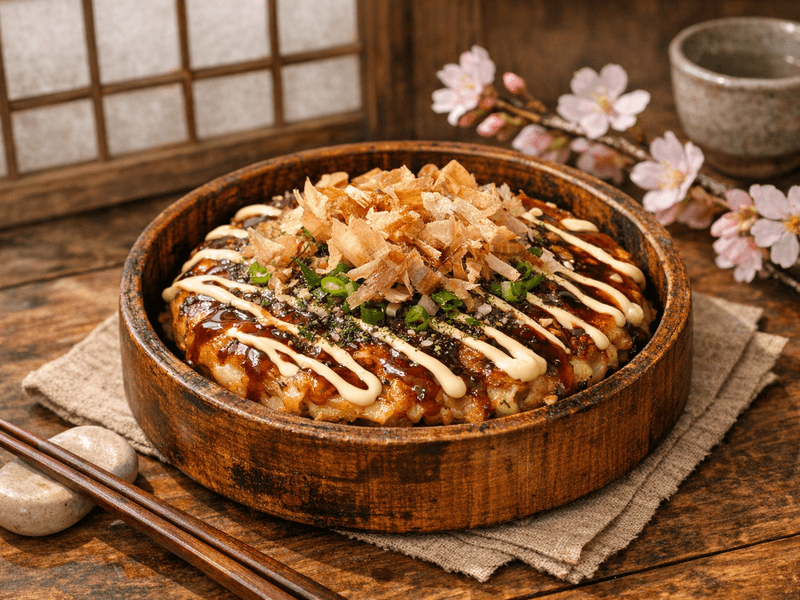
Savory Japanese pancake with cabbage, pork, and toppings — Osaka/Hiroshima specialty
How to Make Okonomiyaki (Traditional & Healthy Version)
Okonomiyaki is a beloved Japanese savory pancake, often referred to as 'Japanese pizza' due to its customizable nature. Originating from the Kansai region, especially Osaka, this dish beautifully showcases Japan's culinary creativity using seasonal and local ingredients. The name 'okonomi' means 'what you like,' and 'yaki' means 'grilled,' emphasizing its versatility. Okonomiyaki is enjoyed across Japan at homes, restaurants, and street food stalls, making it a staple for families and gatherings. Its umami-rich flavor is achieved with a combination of dashi-infused batter, tender cabbage, and a variety of toppings, including pork slices, seafood, or vegetables. Traditionally cooked on a teppan (iron griddle), okonomiyaki is both satisfying and visually appealing, topped with tangy okonomiyaki sauce, creamy Japanese mayonnaise, aonori (seaweed flakes), and katsuobushi (bonito flakes). This healthy version focuses on lean protein, fiber-rich vegetables, and minimal oil, making it suitable for modern health-conscious diets without compromising on authentic taste. Okonomiyaki is a perfect snack and meal, reflecting Japan’s balance of flavor, nutrition, and presentation.
材料(1 medium-sized okonomiyaki per person分)
- 2 cups finely shredded Cabbage (kyabetsu)
- 1/2 cup All-purpose flour (komugiko)
- 1/2 cup Dashi stock (Japanese soup stock)
- 2 Eggs (tamago)
- 1/4 cup chopped Green onions (negi)
- 4-6 slices Lean pork belly slices (buta bara)
- 2 tbsp Tenkasu (tempura bits) - オプション
- 2 tbsp Okonomiyaki sauce (store-bought or homemade)
- 1 tbsp Japanese mayonnaise (Kewpie)
- 1 tsp Aonori (dried seaweed flakes)
- 1 tbsp Katsuobushi (bonito flakes)
- 1 tbsp Vegetable oil (for cooking)
作り方
- 1
Prepare the batter by whisking flour and dashi stock in a bowl until smooth. Add eggs and mix well.
5 minutes
Use chilled dashi for a lighter, fluffier texture.
- 2
Fold in shredded cabbage, chopped green onions, and tenkasu (if using). Mix gently to avoid crushing the cabbage.
3 minutes
Do not overmix; a loose batter improves texture.
- 3
Heat a non-stick skillet or teppan with vegetable oil over medium heat. Pour half the batter onto the skillet, shaping it into a round pancake.
3 minutes
Press gently to maintain thickness and ensure even cooking.
- 4
Lay 2-3 pork belly slices on top of the pancake. Cover and cook for 5-6 minutes until the bottom is golden brown.
6 minutes
Covering helps cook the pork thoroughly and steams the vegetables.
この料理が健康的な理由
By focusing on lean pork, plenty of vegetables, and minimal oil, this okonomiyaki is lower in saturated fat compared to traditional recipes. The fiber from cabbage aids digestion, while eggs supply high-quality protein. Using dashi instead of water enhances flavor without extra calories. This dish is adaptable, allowing for healthier swaps and seasonal ingredients. It’s a nutritious, balanced snack reflecting Japan’s mindful eating habits.
This okonomiyaki recipe is rich in protein thanks to eggs and lean pork, and high in fiber due to cabbage and green onions. The use of dashi adds essential minerals and umami without extra fat. Cabbage provides vitamins C and K, while tenkasu adds crunch with minimal calories if used sparingly. Okonomiyaki's balanced macros make it suitable for a variety of diets, offering sustained energy and a satisfying meal. Portion control and moderation in sauce and mayonnaise keep this snack heart-healthy.
プロのヒント
- 💡Tip 1: Use fresh, local cabbage for the best texture and sweetness.
- 💡Tip 2: Homemade dashi elevates the umami flavor without extra sodium.
- 💡Tip 3: Garnish with freshly shaved katsuobushi for dramatic presentation and aroma.
保存と提供
Store leftover okonomiyaki in an airtight container in the refrigerator for up to 2 days. Reheat gently in a skillet or microwave to retain texture. Avoid freezing as the cabbage loses crunch.
最適な提供方法: Breakfast or Lunch
栄養成分
| 栄養素 | 100gあたり |
|---|---|
| エネルギー | 170.0 kcal |
| タンパク質 | 8.0 g |
| 炭水化物 | 18.0 g |
| 総脂質 | 7.0 g |
| 食物繊維 | 2.0 g |