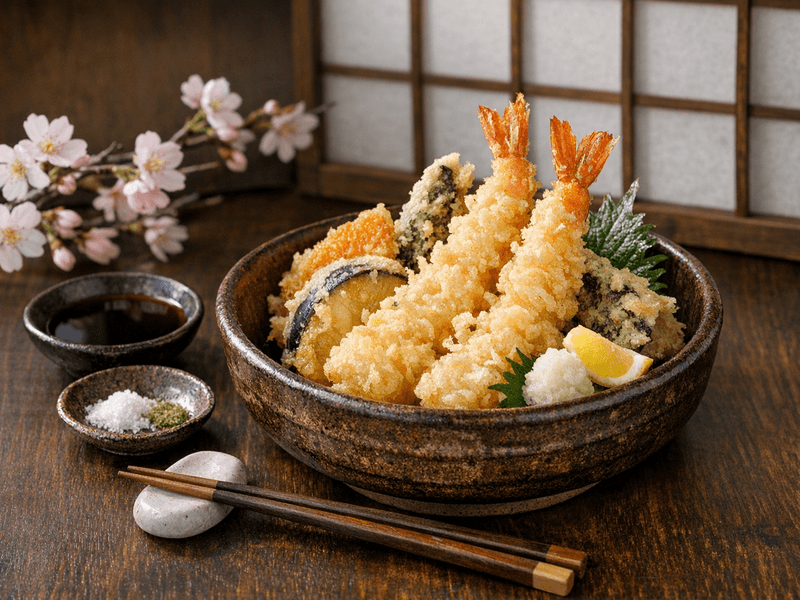
📸 Image coming soon for Tempura Udon
天ぷらうどん
麺類 • 日本
について Tempura Udon
Udon noodles in dashi broth with crispy shrimp tempura
How to Make Tempura Udon (Traditional & Healthy Version)
Tempura Udon is a beloved Japanese noodle soup that showcases the harmonious interplay of textures and flavors central to Japanese cuisine. Featuring chewy udon noodles bathed in a savory, umami-rich dashi broth and topped with crisp, golden tempura shrimp and seasonal vegetables, this dish embodies the spirit of Japanese comfort food. Originating from the Edo period, it’s a staple in udon-ya (noodle shops) and is enjoyed across Japan, especially as a warming meal during colder months. The key to Tempura Udon’s allure lies in its balance: the lightness of the tempura batter contrasts beautifully with the deep, satisfying flavors of the broth. Each ingredient, from the tender menma (bamboo shoots) to the aromatic negi (Japanese green onions), is thoughtfully selected for both flavor and presentation, reflecting the Japanese dedication to seasonality and aesthetics. Tempura Udon is not only visually appealing but also nourishing, making it an excellent choice for those seeking a wholesome, authentic Japanese meal.
材料(1 large bowl with 1-2 shrimp and assorted vegetable tempura分)
- 200g Udon noodles (fresh or frozen (うどん))
- 4 large Shrimp (peeled and deveined (ebi))
- 1 cup Seasonal vegetables (e.g., kabocha, sweet potato, eggplant, shiitake)
- 1/2 cup Tempura flour (or all-purpose flour + cornstarch)
- 1/2 cup Cold water (for tempura batter)
- 1 Egg (for tempura batter)
- 4 cups Dashi stock (kombu and katsuobushi-based, homemade preferred)
- 2 tbsp Soy sauce (low-sodium if preferred (しょうゆ))
- 1 tbsp Mirin (Japanese sweet rice wine)
- 2 tbsp Negi (sliced Japanese green onion)
- 2 small sheets Nori (for garnish) - オプション
- 1 tsp Grated ginger (optional, for garnish) - オプション
- enough for deep frying Vegetable oil (neutral flavor (e.g., canola))
作り方
- 1
Prepare the dashi broth by simmering kombu and katsuobushi in water. Strain and return to pot, then season with soy sauce and mirin. Keep warm.
5 minutes
Use high-quality dashi for superior umami depth.
- 2
Cook udon noodles according to package instructions. Drain and rinse briefly under cold water to prevent sticking.
5 minutes
Do not overcook; udon should be chewy (koshi).
- 3
Prepare tempura batter by gently mixing cold water, egg, and tempura flour. Do not overmix; some lumps are okay for crispiness.
3 minutes
Keep batter cold for light, crisp tempura.
- 4
Heat oil to 170°C (340°F). Dip shrimp and sliced vegetables into batter and fry in batches until light golden and crisp. Drain on paper towels.
7 minutes
Fry a few pieces at a time to maintain oil temperature.
この料理が健康的な理由
This Tempura Udon recipe prioritizes health by using a light tempura batter, fresh seasonal vegetables, lean shrimp, and a broth rich in umami but low in fat. The use of minimal oil and the option for low-sodium soy sauce make it suitable for calorie-conscious eaters. Udon noodles and vegetables offer sustained energy while keeping the dish comforting and satisfying.
Tempura Udon offers a balance of complex carbohydrates from udon noodles, lean protein from shrimp, and an array of vitamins and minerals from seasonal vegetables. The dashi broth is low in fat and rich in minerals like iodine and potassium. Using neutral oils and controlling tempura batter thickness helps manage overall calories. Seasonal vegetables such as kabocha and eggplant provide fiber, beta-carotene, and antioxidants, supporting immune and heart health.
プロのヒント
- 💡Tip 1: Keep tempura batter and ingredients cold for maximum crispiness.
- 💡Tip 2: Slice vegetables thinly for quick, even frying.
- 💡Tip 3: Use homemade dashi for authentic umami-rich flavor.
保存と提供
Tempura Udon is best eaten fresh, as tempura loses its crispness if stored. Store leftover broth and noodles separately in airtight containers in the refrigerator for up to 2 days. Reheat broth gently and assemble with freshly made tempura for best results.
最適な提供方法: Breakfast or Lunch
栄養成分
| 栄養素 | 100gあたり |
|---|---|
| エネルギー | 115.0 kcal |
| タンパク質 | 6.0 g |
| 炭水化物 | 16.0 g |
| 総脂質 | 3.0 g |
| 食物繊維 | 1.0 g |