📸 Image coming soon for Sukiya Gyudon
すき家の牛丼
お弁当・ランチ • 日本
について Sukiya Gyudon
Sukiya beef bowl — Japan's largest gyudon chain
How to Make Sukiya Gyudon (Traditional & Healthy Version)
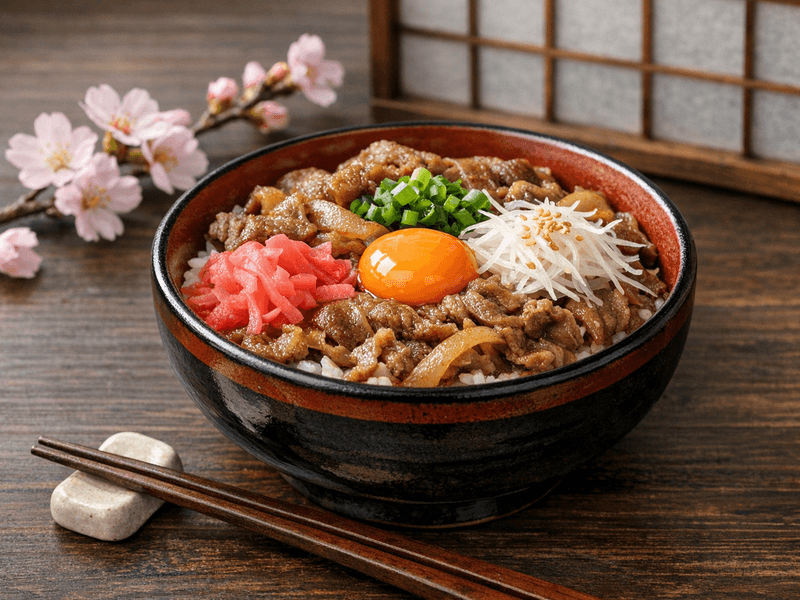
Sukiya Gyudon is a beloved Japanese rice bowl featuring thinly sliced beef simmered in a delicately balanced sauce of dashi, soy sauce, mirin, and onions, then served over a bed of steamed Japanese rice. Originating from the fast-paced lifestyles in Japan, gyudon—literally 'beef bowl'—is a staple in both homes and popular gyūdon-ya restaurants like Sukiya, Yoshinoya, and Matsuya. Its appeal lies in the umami-rich flavors, quick preparation, and satisfying, comforting nature. Gyudon embodies the essence of washoku (Japanese cuisine), emphasizing harmony between ingredients and flavor. This dish is perfect for lunch, offering a wholesome balance of protein, carbohydrates, and savory sweetness. The beef is gently simmered with onions and seasoned with sake, mirin, and a touch of sugar, creating a sauce that is both light and deeply flavorful. Toppings like beni shoga (pickled ginger) and green onions add freshness and color, while a soft onsen tamago (hot spring egg) elevates the dish for special occasions. Adapting traditional gyudon for a health-conscious kitchen means using leaner cuts of beef, brown rice for added fiber, and less sugar without sacrificing authentic taste. Sukiya Gyudon is not just a meal but an experience—a warm, inviting bowl that reflects the Japanese art of simplicity and seasonal eating.
材料(1 medium bowl (about 350g, typical Japanese donburi serving)分)
- 200g Lean beef sirloin, thinly sliced (gyūdon-yō no usugiri niku)
- 2 bowls (about 300g) Japanese short-grain rice (cooked) (hakumai)
- 1 medium (about 120g), sliced Onion (tamanegi)
- 200ml Dashi stock (kombu and katsuobushi base)
- 2 tbsp Low-sodium soy sauce (shōyu)
- 1 tbsp Mirin (sweet rice wine)
- 1 tbsp Sake (cooking sake)
- 1 tsp Sugar (use less for lower calories)
- 2 stalks, finely sliced Green onion (negi) - オプション
- as desired Beni shoga (pickled ginger) (for garnish) - オプション
- 2 Onsen tamago (soft-cooked egg) (optional topping) - オプション
作り方
- 1
Prepare the dashi stock if not using instant. Combine kombu and katsuobushi with water, simmer, and strain for a clear, umami-rich base.
5 minutes
Using homemade dashi elevates the depth of flavor.
- 2
In a small pot, combine dashi, soy sauce, mirin, sake, and sugar. Bring gently to a simmer over medium heat.
3 minutes
Do not let the mixture boil vigorously to preserve delicate flavors.
- 3
Add sliced onions to the simmering sauce and cook until they become translucent and tender.
5 minutes
Slice onions evenly for even cooking and sweetness.
- 4
Add the thinly sliced beef to the pot, spreading it out so it cooks evenly in the simmering liquid. Skim any impurities or foam that rise to the surface.
5 minutes
Do not overcook the beef; keep it tender and juicy.
この料理が健康的な理由
By using lean beef, less sugar, and incorporating brown rice, this Sukiya Gyudon recipe is lower in calories and saturated fat compared to typical restaurant versions. The homemade dashi and reduced-sodium soy sauce keep sodium in check, making it suitable for those mindful of heart health. The combination of high-quality protein, vitamins, and healthy carbohydrates makes it a nourishing lunch option that supports energy and satiety. This recipe aligns with health-conscious eating while remaining faithful to Japanese culinary traditions.
Sukiya Gyudon provides a well-balanced meal rich in lean protein from beef, complex carbohydrates from Japanese rice, and essential vitamins from onions and green onions. The use of homemade dashi minimizes sodium and artificial additives, while the inclusion of eggs adds vitamin B12 and high-quality protein. This dish is low in saturated fat if lean beef is chosen and can be tailored to include more vegetables, providing additional fiber, potassium, and antioxidants. The use of mirin and a small amount of sugar offers subtle sweetness without excess calories.
プロのヒント
- 💡Slice beef against the grain for extra tenderness.
- 💡Let the onions cook slowly to maximize their natural sweetness.
- 💡Add a dash of shichimi togarashi (Japanese seven spice) for a gentle kick.
保存と提供
Store leftover beef and onions (without rice) in an airtight container in the refrigerator for up to 2 days. Reheat gently before serving over fresh rice. Avoid freezing, as texture may degrade.
最適な提供方法: Breakfast or Lunch
栄養成分
| 栄養素 | 100gあたり |
|---|---|
| エネルギー | 185.0 kcal |
| タンパク質 | 10.0 g |
| 炭水化物 | 22.0 g |
| 総脂質 | 6.0 g |
| 食物繊維 | 1.0 g |