卵焼き(たまごやき)
朝食 • 日本
について Tamagoyaki (Rolled Omelette)
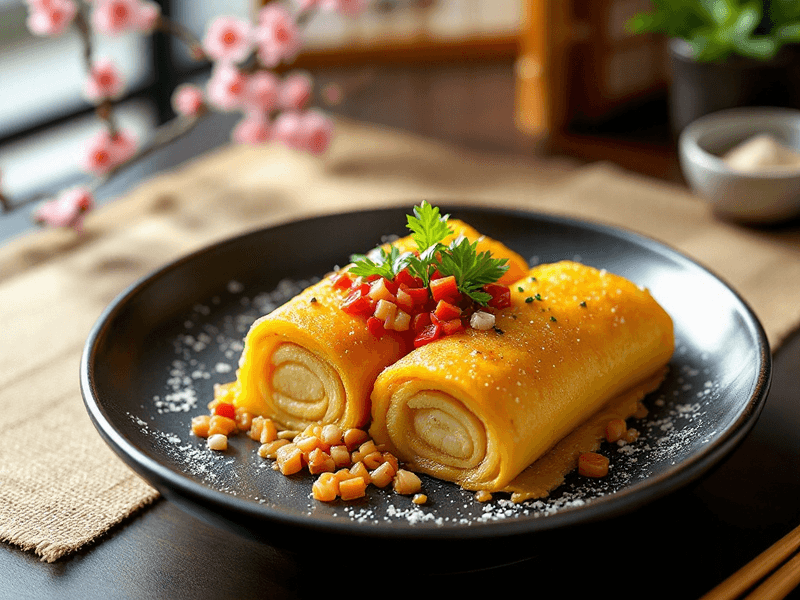
Sweet rolled Japanese omelette
How to Make Tamagoyaki (Traditional & Healthy Version)
Tamagoyaki, the beloved Japanese rolled omelette, is a staple of traditional Japanese breakfasts and bento boxes. Its origins trace back to the Edo period, where chefs first developed the technique of delicately rolling sweetened and seasoned eggs in a rectangular pan called a makiyakinabe. Tamagoyaki is celebrated for its beautiful golden layers, gentle sweetness, and umami depth from dashi (Japanese stock). The dish showcases the Japanese principle of balancing simple ingredients with precise technique. Tamagoyaki is often enjoyed in the morning or as part of a lunch, prized for its light yet satisfying flavor. Its soft, fluffy texture and subtle umami make it a favorite among children and adults alike. The use of seasonal garnishes such as grated daikon (daikon oroshi) and shiso leaves not only enhances the taste but also elevates the dish’s visual appeal, reflecting the Japanese aesthetic of 'washoku'—harmony in food. This healthy version uses less sugar and a touch of kombu dashi to maximize flavor while keeping calories in check, making it an excellent choice for health-conscious eaters.
材料(2 slices (approx. 60g) per person分)
- 4 large Eggs (tamago)
- 2 tablespoons Kombu dashi (Japanese kelp stock)
- 1 teaspoon Low-sodium soy sauce (shoyu)
- 1 tablespoon Mirin (sweet rice wine) (optional: use low-sugar or omit for fewer calories) - オプション
- 1 teaspoon Sugar (optional: use less for a healthier version) - オプション
- 1/4 teaspoon Salt (sea salt)
- 1 teaspoon Neutral oil (such as canola or grapeseed)
- 2 tablespoons Daikon oroshi (grated daikon radish, for garnish) - オプション
- 2 leaves Shiso leaf (perilla, for garnish) - オプション
作り方
- 1
Crack eggs into a bowl. Add kombu dashi, soy sauce, mirin, sugar, and salt. Whisk gently until yolks and whites are just blended, avoiding excess foam.
3 minutes
Do not overbeat; gentle mixing preserves a tender texture.
- 2
Strain the egg mixture through a fine sieve into another bowl to ensure a smooth texture and remove chalaza.
2 minutes
This step ensures your Tamagoyaki is silky and free of lumps.
- 3
Heat a nonstick or makiyakinabe pan over medium-low heat. Lightly oil the pan with a paper towel.
2 minutes
Keep the pan just hot enough to avoid browning the eggs.
- 4
Pour a thin layer of egg mixture into the pan, tilting to cover the surface. When the egg is half-set, use chopsticks or a spatula to gently roll it toward you.
3 minutes
Work quickly but gently to avoid tearing the omelette.
この料理が健康的な理由
This Tamagoyaki recipe prioritizes nutrient density and flavor while minimizing added sugars, making it ideal for a health-conscious diet. By incorporating kombu dashi and limiting oil, the dish remains light but full of umami. It is satiating yet low in calories, supports muscle repair, and is gentle on the digestive system. The inclusion of fresh daikon and shiso adds antioxidants and fiber.
Tamagoyaki offers a balanced macronutrient profile, rich in high-quality protein from eggs and moderate in healthy fats. By using kombu dashi instead of traditional bonito-based dashi, this recipe is suitable for vegetarians. Eggs provide essential vitamins such as B12, D, and choline, along with minerals like selenium. Low-sodium soy sauce and reduced sugar content help keep sodium and overall calories in check, making it a smart choice for those monitoring their intake.
プロのヒント
- 💡Tip 1: Straining the egg mixture yields a smoother omelette.
- 💡Tip 2: Use a makiyakinabe (rectangular pan) for authentic shape, but a small round pan works in a pinch.
- 💡Tip 3: Keep the heat low to avoid browning and ensure a tender, even texture.
保存と提供
Allow Tamagoyaki to cool to room temperature before storing. Wrap tightly in plastic wrap or place in an airtight container. Refrigerate for up to 2 days. Best enjoyed fresh; reheat gently or serve at room temperature.
最適な提供方法: Breakfast or Lunch
栄養成分
| 栄養素 | 100gあたり |
|---|---|
| エネルギー | 150.0 kcal |
| タンパク質 | 10.0 g |
| 炭水化物 | 4.0 g |
| 総脂質 | 11.0 g |
| 食物繊維 | 0.0 g |