について Miso Soup
Fermented soybean paste soup with tofu and wakame — served at every meal
How to Make Miso Soup (Traditional & Healthy Version)
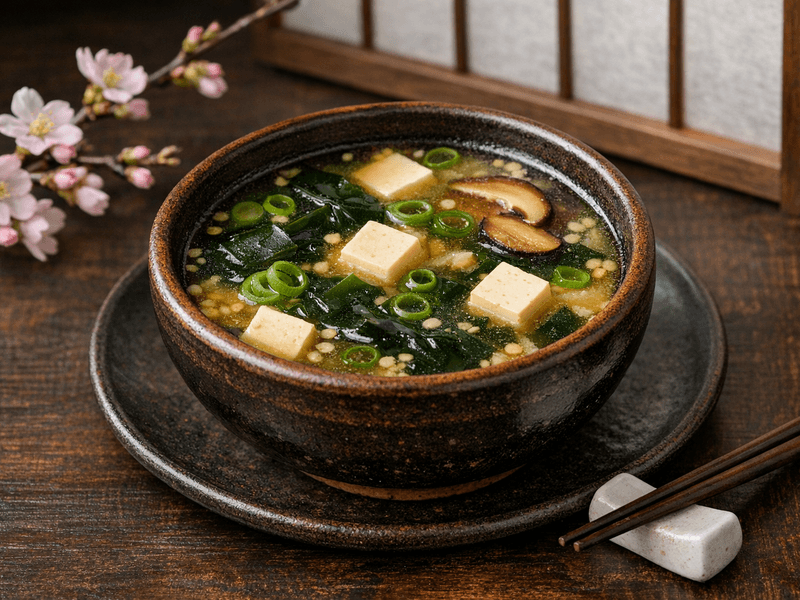
Miso Soup, or 'Misoshiru' (味噌汁), is a quintessential Japanese breakfast dish enjoyed for centuries across Japan. This umami-rich soup is crafted from a base of kombu (kelp) and shiitake dashi, blended with miso paste and delicately balanced with seasonal ingredients like tofu, wakame (seaweed), and scallions. The result is a comforting, nourishing bowl that awakens the senses and gently starts your day. Rooted in Japanese culinary tradition, miso soup is more than just a meal—it's a ritual. Its simplicity and depth come from high-quality ingredients and mindful preparation, embodying Japan’s respect for the seasons and the art of subtle flavors. The interplay of miso’s savory complexity with the gentle sweetness of dashi creates a harmonious taste that is both satisfying and light. Miso soup is a fantastic healthy choice, low in calories and fats, yet rich in protein and minerals. It’s the perfect way to introduce umami to any plant-based or vegan diet, especially when paired with fresh, local vegetables.
材料(1 medium bowl (about 250ml)分)
- 2 cups Dashi (kombu & dried shiitake mushroom stock) (vegan dashi, use kombu (kelp) and dried shiitake)
- 2 tbsp Miso paste (use white (shiro) or red (aka) miso)
- 100g Silken tofu (cut into 1cm cubes)
- 1 tbsp Wakame (dried seaweed) (rehydrated in water)
- 2 tbsp Scallions (negi) (finely sliced)
- 1/4 small Carrot (julienned, seasonal) - オプション
- 2 tbsp Daikon radish (thinly sliced, optional) - オプション
- 1/2 cup Spinach or komatsuna (chopped, seasonal greens) - オプション
- as needed Water (for dashi preparation)
作り方
- 1
Prepare vegan dashi by soaking kombu and dried shiitake mushrooms in 3 cups of cold water for 30 minutes. Heat gently until just before boiling, then remove kombu and mushrooms.
10 minutes
Never boil kombu to preserve umami flavor.
- 2
Rehydrate wakame in a small bowl of water for 5 minutes, then drain and chop if needed.
5 minutes
Wakame expands quickly—use sparingly.
- 3
Add carrot, daikon, or spinach to the dashi and simmer gently for 3-5 minutes until just tender.
5 minutes
Add seasonal vegetables for extra vitamins.
- 4
Lower the heat. In a small bowl, blend miso paste with a ladle of hot dashi until smooth, then gently stir this mixture back into the soup (do not boil).
2 minutes
Boiling miso destroys its probiotics and alters flavor.
この料理が健康的な理由
This miso soup is a healthy breakfast choice thanks to its high nutrient density and low calorie load. It's free from cholesterol and saturated fat, making it heart-friendly. The inclusion of fermented foods, seaweed, and seasonal vegetables boosts immune support and gut health. Choosing whole, minimally processed ingredients ensures maximum nutritional value while keeping sodium in check by adjusting miso quantity.
Miso soup is naturally low in calories and fat while providing plant-based protein from tofu and miso. The fermented miso paste is rich in probiotics, which can support digestive health. Sea vegetables like wakame offer iodine, magnesium, calcium, and iron. Seasonal vegetables and scallions add dietary fiber, vitamin A, C, and potassium. Using kombu and shiitake dashi instead of fish-based stocks maintains a vegan profile and supplies additional minerals and umami compounds.
プロのヒント
- 💡Tip 1: Dissolve miso off heat to preserve its delicate enzymes and flavor.
- 💡Tip 2: Experiment with seasonal Japanese vegetables for variety and nutrition.
- 💡Tip 3: Slice ingredients uniformly for a refined, authentic presentation.
保存と提供
Best enjoyed freshly made. Store leftovers in an airtight container in the refrigerator for up to 24 hours. Reheat gently without boiling to preserve the flavor and probiotics.
最適な提供方法: Breakfast or Lunch
栄養成分
| 栄養素 | 100gあたり |
|---|---|
| エネルギー | 35.0 kcal |
| タンパク質 | 3.0 g |
| 炭水化物 | 3.0 g |
| 総脂質 | 1.0 g |
| 食物繊維 | 1.0 g |