いちご大福
デザート・和菓子 • 日本
について Strawberry Daifuku
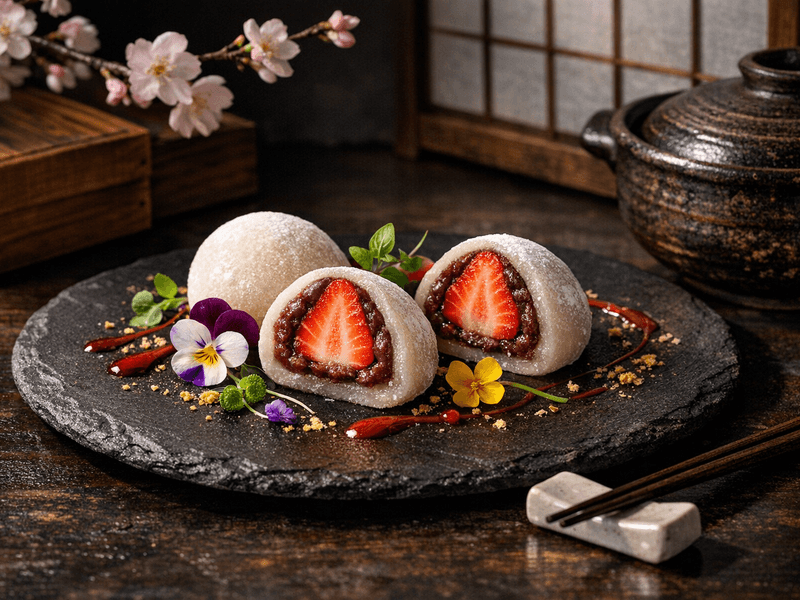
Mochi stuffed with red bean paste and a fresh strawberry
How to Make Strawberry Daifuku (Traditional & Healthy Version)
Strawberry Daifuku, known in Japan as Ichigo Daifuku (いちご大福), is a delightful and visually stunning wagashi (Japanese confection) that captures the essence of spring. Originating from Japan, this sweet treat consists of a fresh, juicy strawberry enveloped in a layer of sweet red bean paste (anko) and mochi (glutinous rice cake). The harmonious combination of natural sweetness, subtle umami, and chewy texture makes Strawberry Daifuku a favorite during the strawberry season and a staple in Japanese dessert culture. Ichigo Daifuku is celebrated for its elegant presentation and balanced flavors, making it an ideal choice for tea ceremonies, festive occasions, and everyday enjoyment. Its appeal lies in the contrast between the tartness of the strawberry, the mellow sweetness of anko, and the soft, pillowy mochi. In Japan, this dessert is often enjoyed during Hinamatsuri (Doll's Festival) and spring gatherings, as strawberries reach their peak freshness. Strawberry Daifuku is not only delicious but also a healthy, vegetarian option that highlights Japan's tradition of using seasonal ingredients and meticulous craftsmanship.
材料(1 large Daifuku per serving分)
- 2 large Fresh strawberries (Ichigo)
- 4 tbsp Sweet red bean paste (Anko (粒あん or こしあん))
- 1/2 cup Glutinous rice flour (Shiratama-ko or Mochiko)
- 2 tbsp Sugar (Japanese sugar preferred)
- 1/3 cup Water (Filtered)
- 2 tbsp Cornstarch or potato starch (Katakuriko for dusting)
- Pinch Salt - オプション
- 1 tsp Optional matcha powder (For color/flavor) - オプション
- 1/4 tsp Optional vanilla extract (For aroma) - オプション
作り方
- 1
Wash and pat dry the strawberries. Remove the stems. Divide anko into 2 portions and wrap each strawberry completely in the paste, forming a smooth ball.
5 minutes
Use slightly damp hands to prevent anko from sticking.
- 2
In a microwave-safe bowl, combine glutinous rice flour, sugar, and water. Mix until smooth. Add optional matcha for color.
3 minutes
Ensure flour is fully dissolved to avoid lumps.
- 3
Microwave the mixture for 1 minute, stir, then microwave for another minute. Stir again and continue in 30-second intervals until the dough becomes thick and slightly translucent.
6 minutes
Keep an eye on the dough to prevent overcooking.
- 4
Dust a clean surface with katakuriko (starch). Transfer the hot mochi, sprinkle more starch on top, and gently flatten it. Let it cool slightly.
2 minutes
Work quickly while mochi is warm for easier handling.
この料理が健康的な理由
This dish is healthy because it uses natural, minimally processed ingredients, features seasonal fruit, and is low in saturated fat. By focusing on portion control and using fresh strawberries, Strawberry Daifuku is a nutritious treat suitable for calorie-conscious diets. The use of anko, a plant-based protein, further enhances its health benefits.
Strawberry Daifuku is a vegetarian dessert that offers a balance of carbohydrates from mochi and anko, fiber and vitamin C from strawberries, and minimal fat. The red bean paste provides protein, iron, and antioxidants, while the strawberries are rich in vitamins and minerals. Using minimal sugar and seasonal fruit makes this wagashi a healthier choice compared to many desserts.
プロのヒント
- 💡Tip 1: Use the freshest, ripest strawberries for optimal flavor and appearance.
- 💡Tip 2: Work quickly with mochi while it is warm to prevent sticking and tearing.
- 💡Tip 3: Dust hands and surface with katakuriko to handle mochi easily.
保存と提供
Strawberry Daifuku is best enjoyed fresh, but can be stored in an airtight container in the refrigerator for up to 24 hours. Mochi texture may harden, so allow to come to room temperature before serving.
最適な提供方法: Breakfast or Lunch
栄養成分
| 栄養素 | 100gあたり |
|---|---|
| エネルギー | 130.0 kcal |
| タンパク質 | 2.0 g |
| 炭水化物 | 28.0 g |
| 総脂質 | 0.5 g |
| 食物繊維 | 1.0 g |